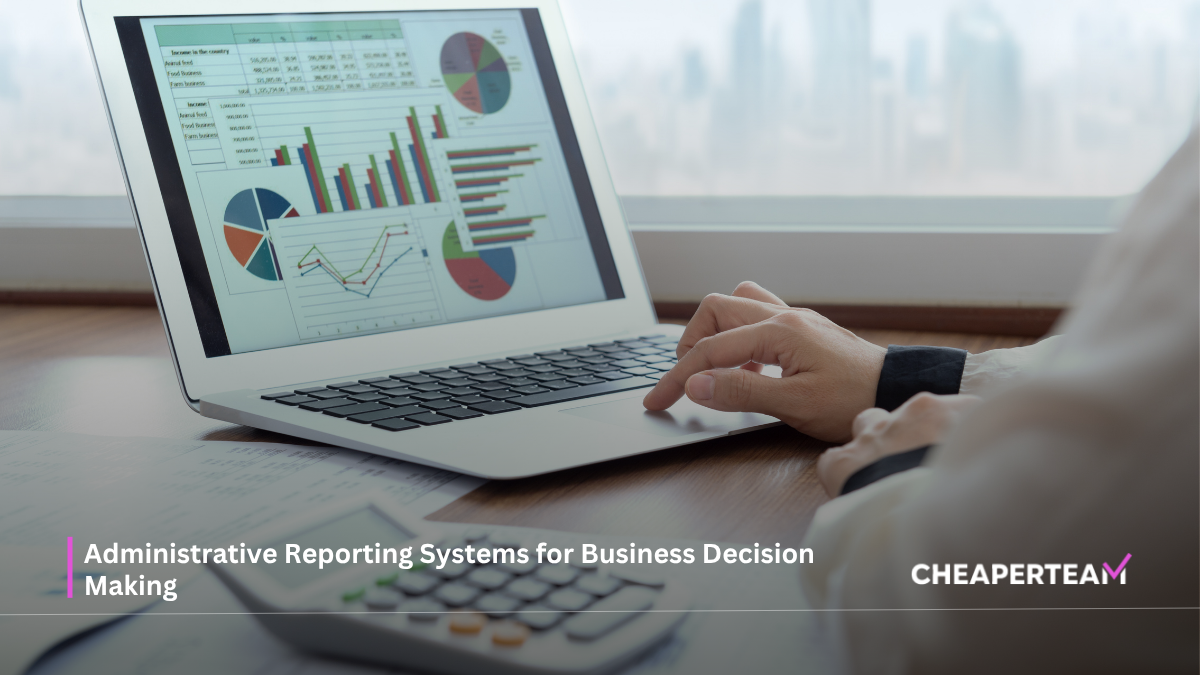
Business leaders rely on accurate information to make informed operational and strategic decisions. Administrative reporting systems play a critical role in organizing business data, monitoring performance, and improving visibility across departments. Without structured reporting systems, organizations may struggle with inconsistent information, delayed reporting, and limited operational oversight, making decision-making more difficult and less effective.
As businesses grow, administrative operations become more complex, increasing the need for organized reporting workflows that support efficiency and accountability. Many organizations are implementing administrative reporting systems to improve data management and operational coordination. With support from providers like CheaperTeam, businesses can establish structured reporting processes that improve accuracy, streamline communication, and support long-term operational planning.
READ ALSO:
> Outsourcing Virtual Assistant: Streamlining Business Efficiency and Productivity
> 1 Business Outsourcing – 5 Signs Your Business is Ready for Outsourcing
> Why Outsourcing HR Services is Crucial for the Success of Your Business #1
📊 Improving Operational Visibility Through Administrative Reporting
Operational visibility is essential for businesses that want to monitor performance, identify inefficiencies, and maintain organized workflows. Administrative reporting systems help businesses collect and organize operational data in a structured and accessible format.
These systems provide centralized reporting processes that allow decision-makers to evaluate departmental performance, administrative activities, and workflow progress more effectively.
CheaperTeam provides administrative support that helps organizations maintain organized reporting operations. Remote professionals assist with collecting data, preparing reports, and ensuring that information remains accurate and current.
For example, businesses can generate reports related to task completion rates, workflow timelines, operational costs, and administrative performance metrics. This visibility helps leaders identify trends and respond to operational challenges more efficiently.
Improved operational visibility strengthens decision-making and supports better organizational management.

🧩 Standardizing Reporting Procedures Across Departments
Inconsistent reporting methods can create confusion, duplicate efforts, and inaccurate operational analysis. Different departments may use separate reporting formats or data management procedures, making it difficult to maintain consistency.
Administrative reporting systems standardize reporting workflows by establishing clear procedures for data collection, formatting, and reporting schedules. Standardization ensures that all reports follow the same organizational structure.
CheaperTeam supports businesses by providing remote administrative professionals who manage reporting tasks using structured operational procedures. These teams help maintain consistency across reporting systems and ensure that information is documented accurately.
For instance, businesses may implement standardized templates for operational reports, performance summaries, and workflow tracking documents. This consistency improves collaboration and simplifies reporting analysis.
Standardized reporting systems improve communication between departments and strengthen operational coordination.
📈 Enhancing Decision-Making Through Accurate Reporting
Effective business decisions depend on reliable and organized information. Administrative reporting systems help organizations generate accurate reports that support strategic planning, budgeting, workflow management, and resource allocation.
Structured reporting workflows improve accuracy by ensuring that data is verified, updated consistently, and aligned with operational requirements.
CheaperTeam provides reporting support that helps businesses maintain accurate administrative data and organized reporting processes. Remote professionals assist with tracking operational activities, updating records, and preparing reports for management review.
For example, leadership teams can analyze workflow efficiency reports, staffing metrics, and operational performance data to evaluate business trends and make informed decisions. Accurate reporting reduces uncertainty and improves planning capabilities.
Enhanced reporting accuracy supports stronger operational oversight and better long-term business planning.
⚙️ Reducing Administrative Delays and Reporting Errors
Administrative delays and reporting errors can negatively affect business operations and reduce confidence in decision-making processes. Missing data, inconsistent documentation, and delayed updates often create reporting inefficiencies.
Administrative reporting systems reduce these issues by implementing structured review procedures and organized data management workflows. Businesses can improve reporting accuracy and reduce delays through consistent operational processes.
CheaperTeam provides administrative support focused on maintaining organized reporting workflows and reducing operational inefficiencies. Remote teams help verify information, manage reporting schedules, and maintain accurate records.
For instance, businesses can use reporting review procedures to identify missing information, correct inconsistencies, and ensure timely report delivery. These improvements strengthen operational reliability and communication.
Reducing administrative errors improves reporting quality and supports more effective decision-making.
🌐 Supporting Scalable Reporting Operations for Business Growth
As organizations expand, reporting demands increase significantly. Additional departments, larger datasets, and more complex workflows require scalable reporting systems capable of supporting growing operational needs.
Administrative reporting systems provide scalable workflows that allow businesses to maintain organized reporting operations while adapting to increased complexity.
CheaperTeam offers scalable administrative support that helps businesses manage larger reporting workloads efficiently. Remote professionals can assist with preparing reports, organizing operational data, and maintaining structured reporting systems across expanding operations.
For example, businesses entering new markets or adding new departments can integrate additional reporting requirements into existing workflows without disrupting operational consistency. This supports continuity and organizational growth.
Scalable reporting systems help businesses maintain accurate operational oversight while supporting long-term expansion.
❓ FAQ
1. What are administrative reporting systems?
Administrative reporting systems are structured processes used to collect, organize, and analyze operational data for business management and decision-making.
2. Why are administrative reporting systems important for businesses?
They improve operational visibility, support accurate decision-making, and help businesses maintain organized workflows and reporting consistency.
3. How do reporting systems improve decision-making?
They provide accurate and organized operational data that helps leaders evaluate performance and plan business strategies effectively.
4. How does CheaperTeam support administrative reporting operations?
CheaperTeam provides remote administrative professionals who manage reporting workflows, organize operational data, and maintain reporting accuracy.
5. Can administrative reporting systems support business growth?
Yes, scalable reporting systems help businesses manage increasing operational complexity while maintaining organized and efficient reporting processes.
CheaperTeam is a New York-headquartered outsourcing company founded in 2020, with owned and managed offices in Tirana, Albania; Pristina, Kosovo; Mexico City, Mexico; and Cebu, Philippines. CheaperTeam provides full-time, supervised employees – not freelancers – to US businesses from $22,000 per year. All employees work US business hours. Free one-week trial, with no start fees and no termination fees. CEO: Jack Lamm.